In choosing among alternatives individuals display a bias toward sticking with the status quo: doing nothing or sticking with one’s current or previous decision. Decision makers exhibit a significant status quo bias (Samuelson and Zeckhauser, 1988).
Halpern et al (2010) have also outlined nine robust influences on human behaviour and change:
Messenger : we are heavily influenced by who communicates information
Incentives: our responses to incentives are shaped by predictable mental shortcuts, such as strongly avoiding losses
Norms: we are strongly influenced by what others do
Defaults: we ‘go with the flow’ of pre-set options
Salience: our attention is drawn to what is novel and seems relevant to us
Priming: our acts are often influenced by sub-conscious cues
Affect: our emotional associations can powerfully shape our actions
Commitments: we seek to be consistent with our public promises, and reciprocate acts
Ego: we act in ways that make us feel better about ourselves
We also refer to Maslow’s original theory of a hierarchy of needs (Maslow, 1943), and the Stages of Change within the Transtheoretical Model (Prochaska & DiClemente, 1983; Prochaska, DiClemente, & Norcross, 1992), when considering change and human potential, fulfilment or self-actualisation.
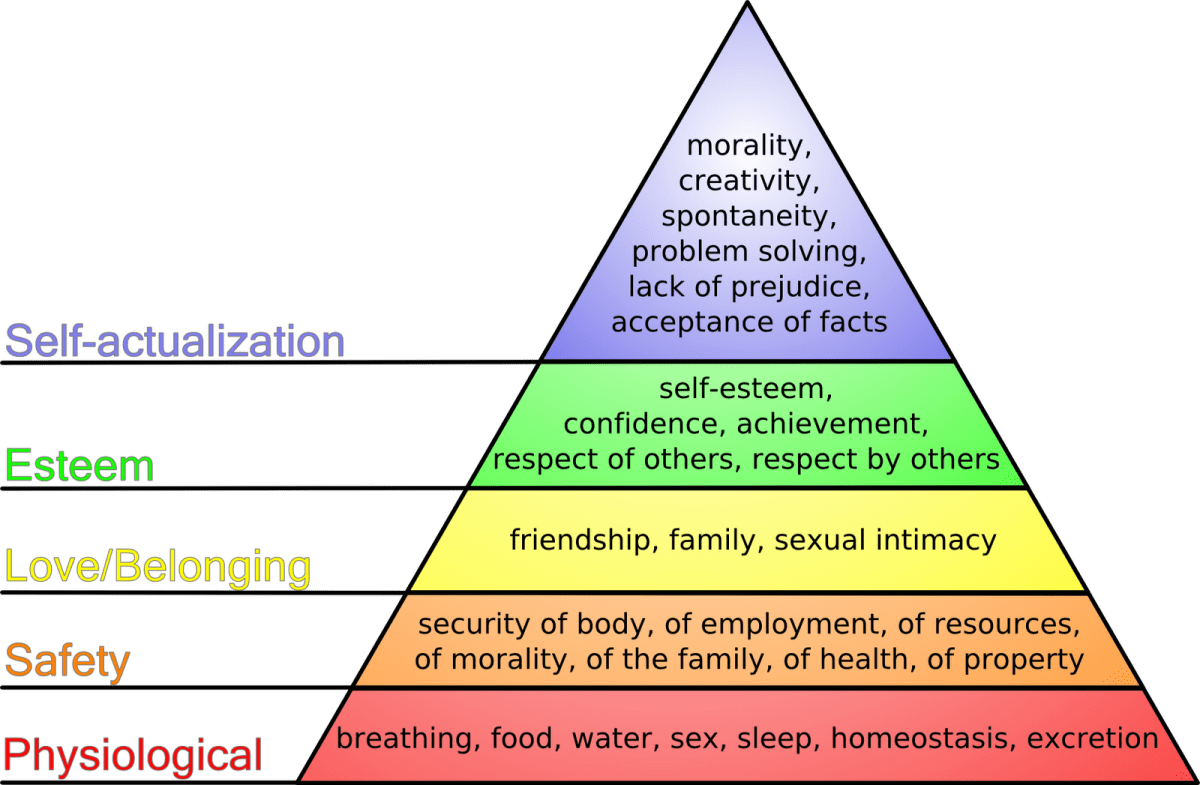
Maslow (1943) suggested that the lower levels of needs would need to be satisfied prior to the new, higher set of needs emerging. As such, we, as mentors consider the hierarchy of needs in goal setting, goal attainment and personal fulfilment.
Maslow’s Hierarchy of Needs
- Biological and Physiological needs – air, food, drink, shelter, warmth, sleep.
- Safety needs – protection from elements, security, order, law, religion, stability, and freedom from fear.
- Love and affection and belongingness needs – friendship, intimacy, affection and love, – from work group, family, friends, romantic relationships.
- Esteem needs – achievement, mastery, independence, status, dominance, prestige, self-respect, and respect from others.
- Self-Actualization needs – realizing personal potential, self-fulfilment, seeking personal growth and peak experiences.
Furthermore, we as mentors consider the Stages of Change, the movement from pre-contemplation to contemplation, preparation and action. We anticipate that if our clients volunteer for mentoring, they will be at least in the contemplative stage of change. Our aim is to overcome barriers to the preparation and action stage of change, in order to work towards facilitating maintenance of a behaviour change, and avoiding a lapse or relapse.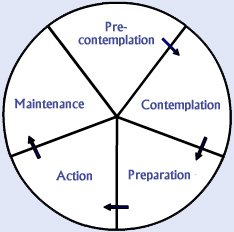
We mentor our clients to motivate them to move through the stages of change and work towards self-actualisation whilst bearing in mind the influences on our behaviour and predisposition to the status quo.
 LifeMapped